Build with AI 2026: SLIIT Buildathon
Exploring the frontiers of Agentic AI at the SLIIT Buildathon. This was a hands on experience in building, orchestrating, and deploying intelligent agent based applications, bringing theoretical concepts to life through real world development.
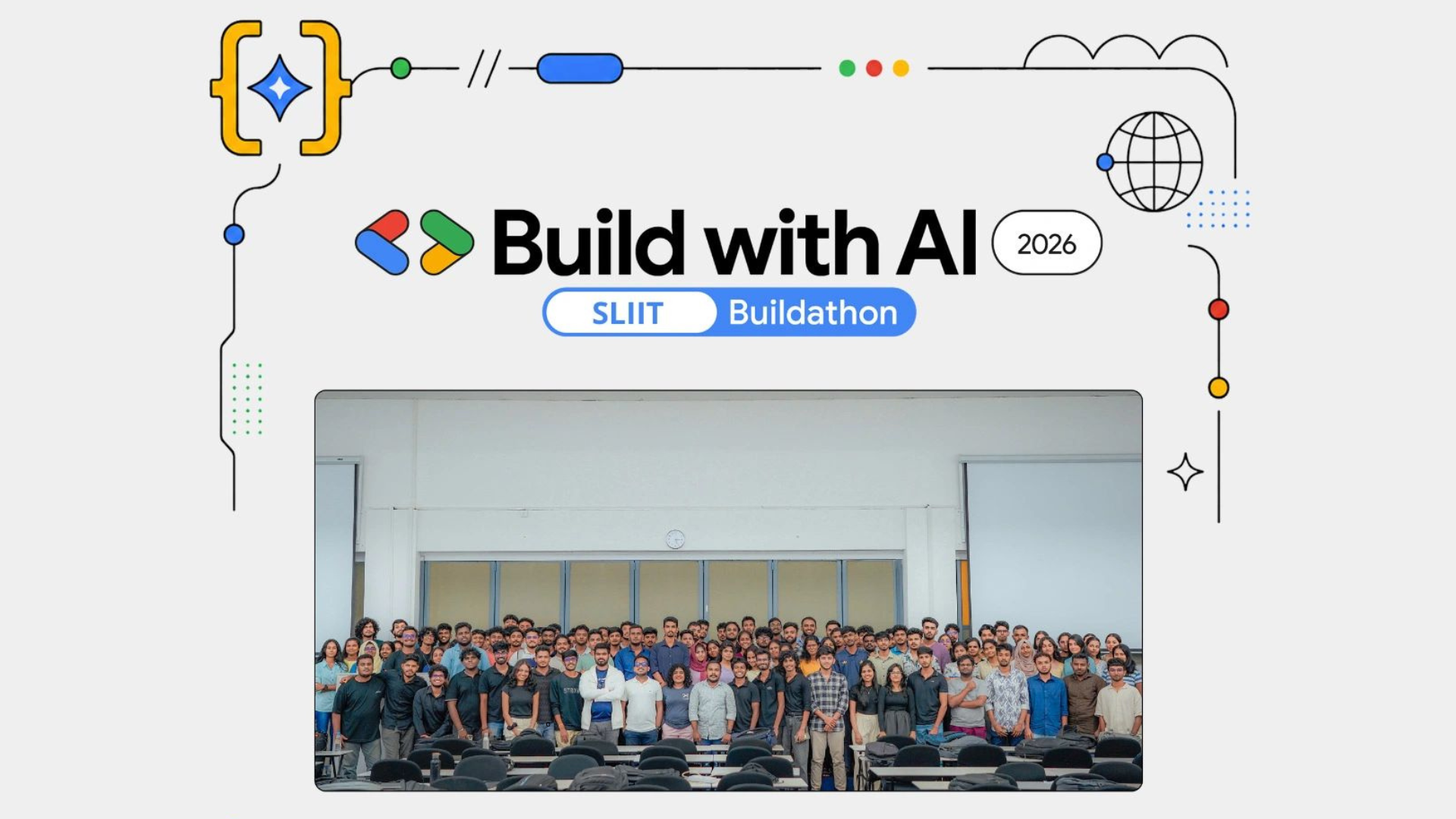
Exploring the frontiers of Agentic AI at the Build with AI 2026: SLIIT Buildathon. This was a hands on experience in building, orchestrating, and deploying intelligent agent based applications under intense time constraints, bringing theoretical concepts to life through real world development.
The event was organized around both technical learning and implementation. We were introduced to the concepts behind AI agents and worked with Google's Agent Development Kit (ADK) to understand how agent based applications can be structured, orchestrated, and integrated with external capabilities.
What I found particularly valuable was the transition from theory to implementation. Instead of only learning how agents work conceptually, we had to apply those concepts while building a functional system within a limited timeframe. This meant understanding the technology quickly, making architectural decisions, integrating different components, and troubleshooting issues as they appeared.
Working under those constraints gave me a better understanding of some of the practical considerations involved in developing agentic applications. An AI powered system is not simply about connecting a model to an application; it also requires careful consideration of how tasks are defined, how the agent interacts with tools, how information flows through the system, and how reliably the overall workflow can be controlled.
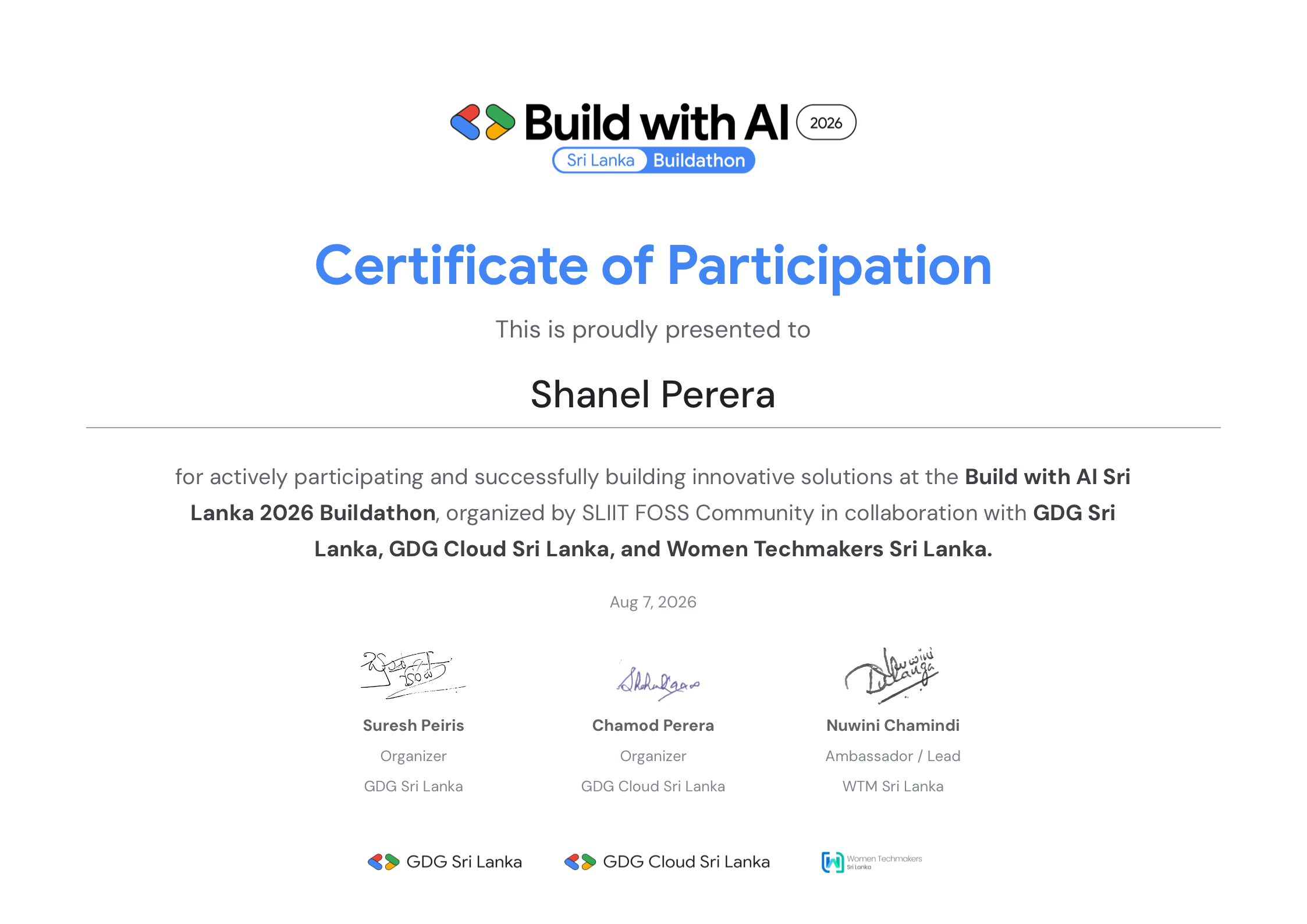
Certificate of Participation
The buildathon was also a valuable milestone in my learning journey, and I was pleased to receive a Certificate of Participation for the event.
Team Stellarix
For the buildathon, I worked as part of Team Stellarix, together with Supun Dharmaratne, Dileepa Iduranga, Sasiru Sithujaya, and Punsith Rankalana.
Our team developed Closet AI, an AI powered fashion assistant that provides personalized outfit recommendations based on factors such as occasion, dress code, weather, personal preferences, and wardrobe information.
The project gave us an opportunity to apply agentic concepts to a practical use case rather than building a system purely as a technical demonstration. We had to decide which functionality was essential, determine what could realistically be implemented within the available time, and structure our work so that different parts of the system could be developed in parallel.
The time constraint also made the development process more interesting. Not every initial idea could make it into the final implementation, and some approaches had to be reconsidered as we encountered technical limitations. Working through those situations helped me understand the importance of prioritization and making engineering decisions based on both technical feasibility and the value delivered to the user.
Working with Agentic AI
One of the main things I took away from the event was a better understanding of how agentic systems differ from conventional AI applications.
A traditional application might use a model primarily to generate an output from an input. With an agentic approach, the system can be designed around a broader workflow where the model can determine what actions are required, interact with available tools, and work toward completing a task.
This introduces another layer of engineering beyond the model itself. The application needs to define the agent's responsibilities, available tools, interaction flow, and boundaries. It also raises practical considerations around reliability, observability, safety, and controlling the actions an agent is allowed to perform.
Getting to work with these ideas through a real project made the concepts much more concrete for me. It also showed me that building useful AI applications requires a combination of software engineering principles and an understanding of how AI systems behave.
The Experience
Another valuable part of the buildathon was working alongside other participants who were experimenting with similar technologies. Seeing different solutions to similar problems was a good reminder that there is rarely a single approach when designing an AI powered application.
The experience also reinforced the importance of collaboration in software development. Working within a fixed timeframe required us to communicate clearly, divide responsibilities, review decisions quickly, and help each other resolve issues when they came up.
More importantly, the event gave me the opportunity to move beyond simply learning about AI technologies and actually use them to build something. That practical experience helped me identify areas I want to explore further, particularly around AI agents, tool integration, multi step workflows, and intelligent applications.
Looking Ahead
I’m grateful to GDG Sri Lanka, GDG Cloud Sri Lanka, Women Techmakers Sri Lanka, SLIIT FOSS Community, and the Software Engineering Student Community SLIIT for organizing and supporting the event and creating an environment where participants could experiment with emerging AI technologies.
The Build with AI 2026: SLIIT Buildathon was a valuable experience in understanding both the possibilities and the engineering challenges of agentic AI. More than the final project, I value the opportunity to experiment with a new development paradigm, collaborate under real constraints, and gain practical experience that I can carry into future projects.
It has also encouraged me to continue exploring how agent based systems can be designed into reliable, useful software rather than treating AI as simply another feature added to an application.